|
|
|
||||||


|
This website follows issues political, social, religious and economic to provide a context and a forum for accountable discussion. Disputes based on First Amendment rights are a consistent source of grist for the mill, so in September of 2001 we posted a New York Times article about Stanley Cohen's activities at that time. Since then we've had a high level of visits to our site resulting from Google searches on his name, and following an appearance April 30, 2003 on the Hannity & Colmes television show, we received a number of highly charged e-mails. [See box, below] Cohen is a New York-based criminal defense attorney, with a long and consistent record of defending politically unpopular people and groups. His visibility in this arena has increased since 9/11 because of his work for Palestinians and other Moslem groups. 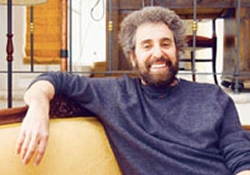 Earlier this year, Harvard's Divinity School hosted a panel on civil rights issues stemming from September 11, as part of the third annual 'Islam in America' conference. Cohen was a participant, and this overview is from the conference's biographical sketch:
For this work, he has been vilified as a "Jewish mouthpiece for Muslim terrorists!" and called a 'moronic Jew-hating dog' by the Jewish Defense Organization. Stanley Cohen was interviewed by telephone on August 10. For clarity for the reader, some comments have been edited to keep topics together, and some minor interpolations and elisions are made without further note. DS … my fundamental question is, what happened? When I was a kid we were taught, you know, everyone is entitled to a vigorous defense--the more miserable the defendant, the more important it is that he get it. And from the public reaction to you defending these cases--it seems like that is getting lost? SC Well, I'd like to frame it in more of a historical context, and take a longer view. As a nation we developed from a backdrop of a double standard. The founders were egalitarian, and at the same time they were slaveholders. They could sit and debate--you read these profoundly inspiring extemporaneous speeches--and then go home and rape a black girl. They were very concerned about what we were as a country, and what we would become, and it has always been schizophrenic. The Civil war shows that, in a way. And I'm a Jew--a progressive Jew. I'm not saying that there is a religious basis to this on my part. For example, one of my heroes is Dorothy Day, a religious Catholic--although maybe not a mainstream Catholic--from the Catholic Worker movement. But I think that a lot of the reaction against me has to do with religion. There's a very strong progressive tradition among Jews in this country. They've been on the receiving end of injustice and they've been defenders against injustice--except when it comes to Israel. It's really not so different from the founders [the schizophrenia]. They [Jews] talk about and mean the progressive things in every other area, but when it comes to Israel .... DS Well, what made us want to talk with you was, after your appearance on Hannity and Colmes we got a number of emails--almost all of them vicious. This is extremely unusual for us. SC I get a lot of hate mail, and … people calling me a self-hating Jew. And I have a stock reply. It goes kind of, 'Thank you for your kind words. It's people like you who make it worthwhile to carry on the fight. I hope you'll contribute to the fund for my lawsuit against Israel.' It makes me feel better. I got a bitter email from a Rabbi, a leader at a Yeshiva. And I told him I was pleased to know that there was a school where they get to decide who's a good Jew or not. DS I remember a student of mine years ago, who was a member of the JDL [Jewish Defense League] and very strong against injustice against Jews. And I said to him, "you know, what it comes down to is, we understand 'Never Again' very differently. For me, never again means never again should any group be oppressed because of who they are, whether it's Nazis oppressing Jews or Jews oppressing Palestinians. For you, never again means never again will anyone pluck a hair from the head of a Jew without reprisal." SC Exactly … A dear friend of mine is Moussa abu Marzook, the head of Hamas. I've spent hundreds, maybe thousands of hours talking to him--as humans, as a Jew talking with a Palestinian--and our friendship transcends Jew and Moslem. What people don't understand is that [these] types of relationships are vital. [People should also understand that] I'm not a fool, not an innocent. I've had the opportunity to meet a lot of people, and speak with them. The notion that I'm a self-hating Jew is insane. There's a brilliant guy at the University in Jerusalem, Israel Shamir, and he said, "They used to call people anti-Semites because they hated Jews. Now, anti-Semites are the people Jews hate." DS It's who gets to do the defining.... I remember hearing Bill Kunstler speak about freedom of speech years ago, and one thing that stayed with me--he said, "Of course you have the right to yell 'Fire!' in a crowded theater--you just have to understand that there will be consequences." SC Right. Bill Kunstler was a mentor--I worked with him for a number of years--and he said that I was a also a mentor to him, reminding him of what it was like to be young and full of fire for justice. You remember the old saying if you have to choose between a strong government with a weak press or a weak government with a strong press? I don't believe-- and what Bill stood for-- there is anything that cannot be said or published. The real political people cannot be deterred. Truly political people will say and publish what they believe. We have this notion that we are bigger, better -- in this country--[in part] because we have this wonderful adversarial process. 'Better the guilty go free than one innocent person be wrongly convicted.' I spent seven years as a public defender in the South Bronx. And I vigorously defended all sorts of terrible people. At the time, people said, 'Stanley doesn't really mean it.' And judges loved me for it. They said, 'Stanley vindicates our ideals.' It proves that the system works--the adversarial system takes pleasure and pride in this. Except in times of crisis, real or imagined--then, far too few lawyers will step up and be counted--then a group, depending on how they're viewed by society--the group gets vilified. I have a friend who is a Capital Defender for the State of New York, a Catholic and a brilliant scholar--whenever I come up with an argument he is able to counter it with knowledge and reason--I told him one time that I remembered as a Jewish kid growing up in New York in a neighborhood along with Irish and Italian kids, when I was 10 or 11, going to their homes and listening to arguments about how many angels could dance on the head of a pin. And I said to him, I couldn't participate--I couldn't see the angels. (Of course, he was able to point out that the argument originates in the Old Testament….) So now I'm defending a case in Chicago, a guy accused of being a terrorist, and the judge asked for briefs. We supplied a very thorough brief, very detailed. And the government supplied a brief, quite good actually, and also very detailed--maybe 500 pages. And a lot of documentation. And all of the documentation, hundreds of pages with notes and substantiation, was redacted--it was blank when I saw it. All there was was a note by John Ashcroft that in the interest of national security this information could not be published. So I can't participate in the debate--I don't have the secret decoder ring. I can't defend my client. I felt like the kid in Brooklyn, who couldn't participate in the discussion because I couldn't see the angels. [As a result of defending this kind of case] I've lost a large part of my criminal defense practice. People fear that if I'm defending them, they'll get labeled as a terrorist. DS In an article by George Packer in the New York Times magazine about [your associate] Lynne Stewart, she was accused of selecting causes and clients with an eye to being on 'the right side of history…." SC I do want to feel that, 100 years from now, I made a difference. To an individual or to a group. DS Well, would you take a JDL kid …. SC I don't take political cases unless there's a connection with the person. There are enough ACLU and ADL etcetera lawyers -- I'm not trying to re-write Stanley Cohen. I am who I am. In my last life I was a social worker. If I sat down with a JDL kid who was accused of throwing a firebomb into a mosque? I would sit down with the kid, and if I connected with him on a personal level, I might take the case. And I would try also to get through to him, how he'd been misinformed and mis-led. People talk all the time about Osama bin Laden. I was asked, would you defend Osama bin Laden? And I said I might, and there was an uproar. But if Osama bin Laden called me on the phone, and said, I want to give myself up in the Southern District of New York and I want you to defend me... and I talked to him and figured out that I was going to sit for 23 months in a courtroom next to him so he could get his five minutes to make a speech to the people of the United States, I wouldn't do it. Time is precious. There are all sorts of war criminals in all times. What do I think when I see Donald Rumsfeld, and know that he was [like] one of the architects of Indo China? I was going to be on a TV show a few months ago, and was waiting to go on, and there in the same room was Henry Kissinger, going on some other show. Dr. Strangelove -- I wanted to say, 'I thought you died years ago' -- I felt this huge anger. [Oh, well] you feel the struggle going on--and life goes on. (Dave Sagarin, August 20, 2003)
|
